Glimpses into lives of Roman suburbanites in Bath revealed in rare finds
Archaeologists have uncovered a treasure trove of Roman-era artefacts beneath the historic Bath Assembly Rooms, offering a rare glimpse into the daily lives of ancient suburbanites. This significant discovery occurred during ongoing restoration work at the iconic Georgian site, revealing that the city’s Roman footprint may be more extensive than previously understood.
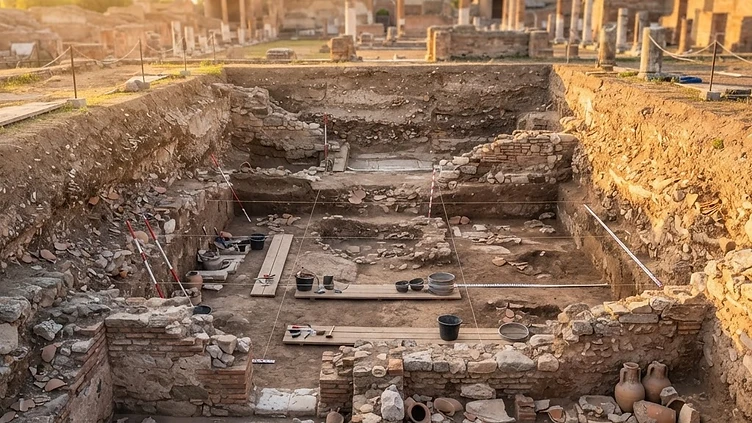
A Hidden Roman World Beneath Bath
In the heart of the historic city of Bath, where the elegance of the Georgian era typically commands all attention, a startling secret from the much deeper past has recently come to light. Underneath the iconic , a building celebrated for its 18th-century architectural splendour, the ground itself has started to whisper stories of life nearly two millennia ago. During routine restoration works, the site’s custodians, the , found themselves overseeing a project that transcended mere building maintenance. In late 2026, the careful work of restoration teams unearthed a series of ancient ditches, revealing that the story of Roman Bath is far from finished. This discovery represents a truly remarkable chapter for local history, offering a rare and intimate glimpse into the lives of those who once lived in the suburban fringes of this ancient settlement.
Treasures from the Earth
As the dig progressed, the soil gave up a collection of artefacts that serve as a bridge to a bygone era. Among the items pulled from the ancient ditches were shards of pottery, each piece likely once part of a functional household vessel used by a suburbanite centuries ago. Alongside these domestic remnants, archaeologists uncovered Roman coins, silent metallic witnesses to the commerce and daily exchanges of a society long since faded. Perhaps most captivating of all was the discovery of fragments from a military helmet. Finding pieces of armour buried in the suburban earth invites us to imagine the presence of soldiers and the defensive needs of a city that was clearly much more sprawling and active than our maps have previously suggested. These findings have not just emerged as curiosities; they are significant pieces of a puzzle that historians are now eagerly reassembling to better understand the true footprint of Roman Bath.
Redrawing the Roman Map
For years, researchers have held a relatively contained view of where Roman Bath ended and the untamed landscape began. However, this recent excavation challenges that long-held consensus. The presence of these substantial ditches, rich with the detritus of daily Roman life, strongly suggests that the city’s settlement was far more extensive than we previously dared to assume. By shifting the known boundaries of this ancient site, the discovery forces a complete rethink of how the Romans organised their suburban spaces. It implies that the city was a thriving, bustling hub that spilled out well beyond the confines previously marked on academic charts. This is not merely a local find; it is a vital update to our national understanding of how Roman urban life functioned across the UK, proving that the ancient world is still very much alive beneath our feet if we only take the time to look closely enough.
A Future Built on History
The National Trust, in its role as the manager of the Bath Assembly Rooms, now holds a new responsibility alongside the ongoing restoration project. The data harvested from these ditches is providing researchers with an invaluable resource, allowing them to map out the suburban expansion of the city with unprecedented detail. As the restoration of the Assembly Rooms continues, the excitement within the archaeological community is palpable. This is an optimistic moment for those who value our collective past, as it demonstrates that even within the most famous and well-trodden tourist sites, surprises remain hidden in wait. The work ensures that the rich history of Bath is preserved and expanded upon, creating a legacy that future generations can learn from and enjoy. By connecting the dots between the shattered pottery, the weathered coins, and the fragments of military gear, we are slowly building a warmer, more complete portrait of the people who helped shape the foundations of our country. As the restoration teams move forward, every scoop of earth is treated with the respect due to such a significant time capsule, ensuring that this unexpected window into the Roman past remains a highlight of Bath’s ongoing story.
Originally reported by
All rights in the original reporting remain with the publishers below.
Originally reported by theguardian.com. Our feature is written independently from verified facts — please support the original reporting:
Read the original storyRelated Wins

 Science
NEW FRONTIERS IN CONSERVATION: UK AGENCY FUNDS BIOTECH BREAKTHROUGHS FOR WILDLIFE
A pioneering UK research initiative has launched a series of radical biotechnology projects designed to help native species survive the accelerating impacts of the climate crisis. By funding 14 innovative research teams, the government’s "invention agency" is moving beyond traditional conservation methods to provide direct biological support to vulnerable ecosystems.
London & South · 5 hours ago

 Culture
BRITISH STAGE ICON TRIUMPHS ON BROADWAY
Acclaimed British actor Lesley Manville has achieved a career milestone by winning the 2026 Tony Award for Best Leading Actress in a Play for her performance in the Broadway production of Oedipus. This prestigious accolade follows her successful transition from the West End to New York, where she captivated audiences in Robert Icke’s modern reimagining of the classic tragedy.
London & South · 11 hours ago

 Sport
SportShaun Edwards inspired by mum’s memory as he beds in with Red Roses
Renowned rugby coach Shaun Edwards has joined the England women’s rugby team in a consultancy role to bolster their defensive strategy, bringing his extensive expertise to the world-leading side throughout the WXV Global Series.
London & South · 11 hours ago
The Sunshine Digest
One bright email each week — verified good news only, unsubscribe in a click.