Skylarks and sandwich terns among new birdies on reserve created from ‘boring old golf course’
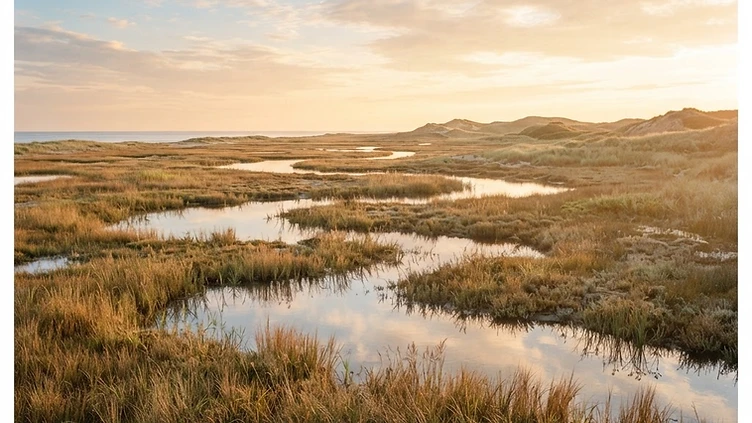
A former golf course on the Lincolnshire coast has been successfully transformed into a thriving nature reserve, providing a vital new sanctuary for migratory and breeding birds. This ambitious conservation project has replaced manicured fairways with wetlands and wading pools, creating a flourishing habitat for diverse wildlife.
The story in 20 seconds
20Project location: Roman Bank, Sandilands, near Sutton-on-Sea, Lincolnshire.
Total area: 30 hectares.
Primary goal: Habitat creation for migratory and breeding birds.
From Fairways to Fledglings at Sandilands
Along the picturesque coast, a remarkable metamorphosis has unfolded where the pristine, manicured lawns of a former golf course have been breathed back into a wilder, more vibrant state. Spanning 30 hectares at Roman Bank, Sandilands, near Sutton-on-Sea, this site was once defined by sand traps and putting greens. Today, it stands as a testament to the power of environmental restoration, having been reimagined as a lush wetland sanctuary. This transformation, officially completed and opened in September 2026, marks a significant chapter for the , proving that even man-made landscapes can be returned to nature with extraordinary success. The project is a triumph of collaboration, bringing together the expertise and vision of the National Trust, the , the Environment Agency, and both Lincolnshire County Council and East Lindsey District Council. By listening closely to local community consultations throughout the design process, these partners have ensured that the site honors its surroundings while prioritizing ecological health.
A New Haven for Winged Travelers
The heartbeat of this new reserve is the restoration of biodiversity. directly on the vital east coast flyway, the area now acts as a crucial staging post for migratory birds journeying across vast distances. Where golfers once walked, spoonbills and godwits now wade through newly formed pools and wetlands, finding the sustenance and rest they desperately require. The habitat creation has been so effective that the site is already playing host to a fascinating array of breeding species. Visitors might catch sight of lapwings, oystercatchers, and snipe busily tending to their young, while the sharp-eyed observer might spot the striking silhouette of a spotted redshank. As the seasons shift, the arrival of short-eared owls provides a mesmerizing spectacle, further highlighting the success of the wetlands in attracting a diverse range of avian life. This sanctuary is not merely an isolated patch of green but a vital artery in the wider Lincolnshire coastal landscape, strengthening the ecological integrity of the entire region.
Sustainable Design and Public Wellness
Beyond its value to the natural world, the reserve has been thoughtfully constructed to serve the people of Lincolnshire and beyond. The site serves as a shining example of modern, sustainable infrastructure, incorporating cutting-edge such as solar power and sophisticated rainwater harvesting systems. These additions ensure that the reserve operates with a light footprint, matching the conservation ethos that birthed the project. Perhaps most importantly, the space is designed to be inclusive and welcoming to all. Recognizing that nature is for everyone, the project team implemented flat paths throughout the 30-hectare area to ensure for all mobility levels. For families and those seeking a deeper connection with the environment, the reserve also offers sensory backpacks, allowing visitors to engage with the sights and sounds of the wetlands in a more immersive and tactile way. It is a space designed not just to be looked at, but to be experienced. The introduction of free weekly wellness walks, held every Monday, provides a regular opportunity for the public to reconnect with the restorative powers of the natural world, fostering a healthy relationship between the community and their local landscape.
A Bright Horizon for Local Wildlife
The success of the Sandilands project sends a powerful message across the United Kingdom. It demonstrates that when government bodies and conservation charities unite with local communities, they can reverse the decline of natural habitats and create meaningful space for wildlife in the modern era. As the wetlands mature, the diversity of species is expected to flourish even further, solidifying the reserve's position as a cornerstone of the Lincolnshire Coastal Country Park. Looking ahead, the site serves as a beacon of optimism, illustrating how landscapes can evolve to meet the needs of both the environment and society. By transforming a former golf course into a flourishing, functional ecosystem, the partners involved have secured a legacy of conservation that will benefit birds and humans alike for generations. The air at Roman Bank now carries the calls of migratory visitors and the rustle of wetland life, a far cry from the quiet of a golf fairway. It is a thriving, living classroom where the importance of biodiversity is written in every wingbeat and every ripple on the water. As visitors walk the paths on a quiet Monday morning, they are participating in a success story that proves nature, when given the chance, will always find its way home.
Originally reported by
All rights in the original reporting remain with the publishers below.
Originally reported by theguardian.com. Our feature is written independently from verified facts — please support the original reporting:
Read the original storyRelated Wins

 Environment
The ‘in awe’ artist painting a wilder Britain
Artist Rebecca Howard is capturing the UK’s ecological recovery through a new exhibition that celebrates the beauty of nature-led restoration. Her latest collection showcases nine diverse rewilding projects, highlighting the positive transformation of landscapes when human intervention is reduced.
London & South · 53 mins ago

 Culture
Joy as young Birmingham Children's Hospital cancer patient rings bell and goes home
A young patient at Birmingham Children’s Hospital has reached a significant milestone in their recovery journey, marking the end of their cancer treatment by ringing the hospital’s ceremonial bell. This emotional tradition serves as a powerful symbol of hope and resilience for the child, their family, and the dedicated medical staff who supported them.
Midlands · 55 mins ago

 Environment
RECONNECTING THE CAPITAL’S WILD SPACES
A bold new environmental initiative is set to transform London’s urban landscape by creating a vast, interconnected network of green corridors, boosting biodiversity and enhancing natural spaces for residents.
London & South · 6 hours ago
The Sunshine Digest
One bright email each week — verified good news only, unsubscribe in a click.