LIFE BEYOND EARTH: MICROBIAL DISCOVERY STRENGTHENS CASE FOR ALIEN HABITATS
Scientists have successfully demonstrated that Earth-based microorganisms can thrive in laboratory environments mimicking the extreme conditions found within the subsurface ocean of Saturn’s moon, Enceladus. This breakthrough provides compelling evidence that the icy moon possesses the necessary chemical and environmental stability to potentially support extraterrestrial life.

A New Horizon for Life Among the Stars
In 2026, the scientific community reached a pivotal milestone that has left the world looking toward the heavens with renewed curiosity. An international team of experts in the field of astrobiology has unveiled a discovery that brings us significantly closer to answering the age-old question of whether we are alone in the universe. By focusing their attention on the distant, icy reaches of Saturn’s moon, , these have found evidence suggesting that life may be more resilient and adaptable than we ever dared to imagine. It is a moment of profound optimism that reminds us that the vast cosmos may be far more hospitable than our terrestrial perspective previously allowed us to believe. The story begins in the laboratory, where the researchers sought to recreate the mysterious, hidden world beneath the surface of this remote celestial body. Enceladus has long been a subject of fascination, known primarily for its sprawling subsurface liquid water ocean, which lies tucked away beneath a thick, protective icy crust. To bridge the gap between Earth and this far-off moon, the team developed a specific salt formulation based on complex thermodynamic modeling. This allowed them to simulate the moon's unique ocean chemistry with incredible precision, providing a stage upon which to test the boundaries of biological endurance. The results were nothing short of extraordinary.
Resilience in the Face of Extremes
The core of this study involved challenging various to thrive within this simulated environment, effectively pushing them to adapt to conditions that are radically different from our own. What the scientists observed was a testament to the remarkable tenacity of life itself. The microbes were not only able to survive but also demonstrated the ability to adjust their own metabolism to account for the limited levels of carbon dioxide present in this artificial, extraterrestrial-like setting. This adaptability highlights a fundamental resilience that suggests life does not merely require a carbon copy of Earth to exist. The findings also draw heavily upon our existing knowledge of the moon, which is already known for featuring hydrothermal vents. These geological features are thought to release warm, mineral-rich water into the dark reaches of the moon's ocean. When combined with the previous data gathered by mission, which identified vital organic compounds within the plumes ejected from the moon’s surface, a clear and compelling picture begins to emerge. Enceladus possesses not just the liquid water required for life, but also the specific chemical ingredients necessary to sustain it.
A Future Shaped by Discovery
As we look at these developments, it is clear that the implications for future space exploration are monumental. The icy crust of Enceladus appears to function as a robust barrier, safeguarding the ocean below from the harsh vacuum of space and potentially fostering a stable habitat for life to flourish undisturbed. This study has provided a vital framework for scientists, offering new ways to identify specific biosignatures that could be used during future missions to probe the depths of our solar system. For those involved in the UK scientific community and beyond, this work acts as a beacon of progress. It confirms that our current understanding of astrobiology is evolving at an exhilarating pace. The research does more than just fill in the gaps of our knowledge; it invites us to reconsider the potential for habitability on worlds that were once dismissed as barren, frozen spheres. It serves as a reminder that the environment of Enceladus is not necessarily a cage for life, but perhaps a sanctuary. By confirming that the fundamental chemical building blocks for existence are present on this moon, we are no longer just guessing about the possibilities—we are actively building a case for extraterrestrial habitats. This breakthrough is an optimistic stride forward, ensuring that when the next generation of space probes sets out into the dark, they will be armed with the knowledge of exactly what to look for, and where the promise of life might be hiding.
Originally reported by
All rights in the original reporting remain with the publishers below.
Originally reported by theguardian.com. Our feature is written independently from verified facts — please support the original reporting:
Read the original story- theguardian.com
- Great news from Saturn’s moon Enceladus in the search for life in space | EurekAlert!
- Great News from Saturn’s Moon Enceladus in the Search for Life in Space • Information for Media and Journalists • Freie Universität Berlin
- Space breakthrough: Saturn's moon could hold alien life as scientists make stunning discovery
Related Wins

 Health
60-bed care home plan emerges for former St John Fisher school site in Chatham
A new 60-bed care home has been proposed for the former St John Fisher school site in Chatham, aiming to provide essential residential and dementia care for the local community. This development is designed to offer high-quality, modern living spaces that include dedicated facilities for social interaction and wellbeing.
London & South · 5 hours ago

 Tech
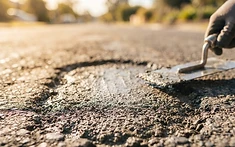
TechRECYCLED TEXTILES PAVE THE WAY FOR SUSTAINABLE ROAD REPAIRS
Maidstone Borough Council is trialling an innovative, eco-friendly method to repair road surfaces by repurposing discarded fast-fashion garments. This sustainable initiative aims to reduce waste while maintaining local infrastructure, marking a creative step forward in circular economy practices for the region.
London & South · 5 hours ago

 Environment
New Vision for Bristol’s Industrial Heart
A major urban regeneration project in Bristol is set to transform 95 hectares of underutilised industrial land into a vibrant, people-centred neighbourhood. The ambitious masterplan prioritises community wellbeing by introducing a car-free canalside promenade, extensive green spaces, and new local amenities.
London & South · 11 hours ago
The Sunshine Digest
One bright email each week — verified good news only, unsubscribe in a click.