HOME ENERGY REVOLUTION: MILTON KEYNES FAMILY ACHIEVES ZERO-BILLS STATUS
A family in Milton Keynes has successfully transformed their four-bedroom home into a self-sufficient energy hub, effectively eliminating their energy bills. By integrating modern renewable technologies, the household has created a practical model for residential sustainability that shields them from fluctuating market prices.
The story in 20 seconds
20The project is located in Milton Keynes, Buckinghamshire.
The property is a four-bedroom family home.
The retrofit includes the installation of solar panels for electricity generation.
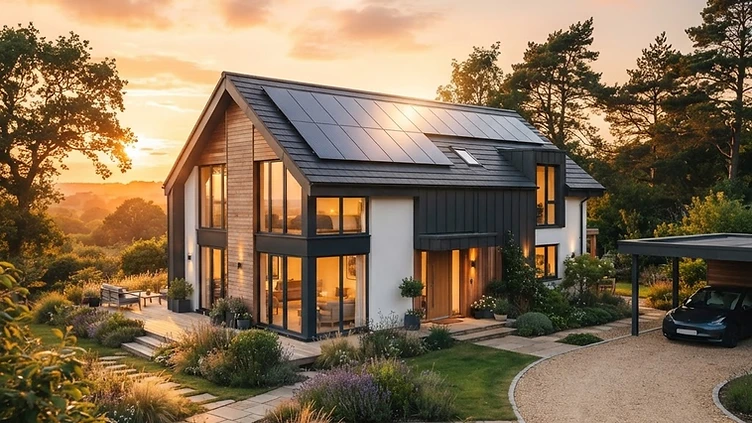
A New Dawn for Buckinghamshire Living
In the heart of Milton Keynes, , one family has achieved a feat that many homeowners across the country have only dreamed of. As of October 2026, the Naylor family has successfully transformed their standard four-bedroom house into a beacon of modern sustainability. By turning their private residence into a fully self-sufficient energy hub, they have managed to eliminate their household energy bills entirely, setting a remarkable example for the rest of the United Kingdom.
This transformation, which relies on the seamless integration of cutting-edge renewable technology, provides a shield against the volatility of the national market. While households up and down the country worry about fluctuating prices and rising energy caps, the Naylors have effectively opted out of the chaos. By their property, they have secured a five-year deal that guarantees zero energy bills, a milestone that underscores what is possible when technology is embraced with purpose and vision.
The Technology Powering the Future
The secret to this success lies in a sophisticated combination of renewable hardware, meticulously integrated to ensure the home functions as a private, closed-loop system. The project began with the installation of solar panels across the roof, transforming the building into a miniature power station that harvests electricity from daylight hours. To ensure this energy does not go to waste, the family incorporated a high-capacity battery storage system. This allows them to capture excess electricity generated during the day and keep it ready for use during the evenings or when the sun is hidden behind the clouds.
Perhaps the most significant change, however, was the departure from traditional heating methods. By replacing older, less efficient systems with a modern heat pump, the family has significantly optimized their energy consumption. This shift ensures that the power captured by the solar array is used to its fullest potential, heating the four-bedroom home efficiently and sustainably. The result is a residential property that no longer relies on the grid for its fundamental needs, operating instead as a truly self-sufficient energy ecosystem.
A Blueprint for National Change
While the Naylor family’s experience is deeply personal, it carries weight far beyond the borders of their Milton Keynes neighbourhood. In the wider context of the UK’s environmental goals, residential buildings represent a substantial challenge, accounting for one-fifth of the country’s total carbon emissions. As the nation pushes toward its ambitious 2050 net-zero target, the way we heat and power our homes has moved to the centre of the conversation. Experts view the kind of retrofitting seen in this Buckinghamshire home as a critical milestone for meeting these long-term climate commitments.
The challenge is significant, with approximately 29 million British homes requiring some form of retrofitting by 2050 to align with these environmental standards. The Naylor family’s project serves as a scalable blueprint, proving that it is not just large industrial sites or new-build developments that can lead the way. Ordinary residential properties, when upgraded with the right mix of technology, can become active participants in the effort to reduce the nation’s carbon footprint. By demonstrating that sustainability and financial independence from energy markets can go hand-in-hand, the family has provided a practical model that other homeowners can realistically look to follow.
Looking Toward a Greener Horizon
As the UK looks toward the middle of the century, the focus on residential retrofitting is only expected to intensify. The success in Milton Keynes highlights that protecting a household from the pressures of energy price cap increases is achievable through investment in renewable infrastructure. This is more than just a technological success story; it is a shift in how we conceive of a home. No longer is a house merely a consumer of national resources; it can be an independent, self-sustaining unit that contributes to a larger, cleaner, and more resilient national infrastructure.
For the Naylor family, the reward for their initiative is a secure and stable future, free from the worries of rising costs. For the rest of the country, their home stands as a bright, optimistic sign of what is possible. Every household that successfully retrofits helps to chip away at those national emission figures, moving the country one step closer to its net-zero goals. As more families look to the Buckinghamshire model, the dream of a self-sufficient, carbon-neutral residential sector becomes a tangible, achievable reality for millions of British citizens.
Originally reported by
All rights in the original reporting remain with the publishers below.
Originally reported by The zero-bills home: how one family is beating the energy price hikes. Our feature is written independently from verified facts — please support the original reporting:
Read the original storyRelated Wins

 Sport
SportCHESS PRODIGIES BREAK BARRIERS IN NATIONAL LEAGUE DEBUT
The 'She Plays to Win' Lionesses have made history by competing in the top division of the Four Nations Chess League, marking the culmination of three consecutive promotions. Despite facing unique regulatory challenges regarding team composition, the squad continues to demonstrate exceptional skill and camaraderie at the highest level of British chess.
London & South · 1 hour ago

 Science
NEW PATHWAYS TO DIAGNOSIS: CAMBRIDGE STUDY SHEDS LIGHT ON AUTOIMMUNE HEALTH
A landmark study from the University of Cambridge is paving the way for more accurate medical care by highlighting critical gender disparities in the diagnosis of autoimmune conditions. By identifying how and why these misdiagnoses occur, researchers are providing the evidence needed to ensure patients receive faster, more effective support for their physical health.
London & South · 1 hour ago

 Environment
A NATURAL REVIVAL FOR BARNES GREEN
A major river restoration project has successfully transformed the Beverley Brook at Barnes Green into a thriving, natural habitat. This initiative has introduced a meandering river channel and a new island, significantly boosting local flood resilience and biodiversity.
London & South · 7 hours ago
The Sunshine Digest
One bright email each week — verified good news only, unsubscribe in a click.