Genetic Secrets of the World’s Oldest Land Animal Revealed
Scientists have successfully sequenced the genome of Jonathan, the 194-year-old giant tortoise, uncovering unique biological mechanisms that protect his cells from the effects of ageing. This breakthrough research offers new insights into how high-fidelity gene maintenance and efficient energy production contribute to extreme longevity.
The story in 20 seconds
20Jonathan is estimated to be 194 years old, having likely hatched around 1832.
He is officially recognised as the world’s oldest living land animal.
The research was conducted by an international team, including biologists from the University of Cambridge.
A Living Link to History
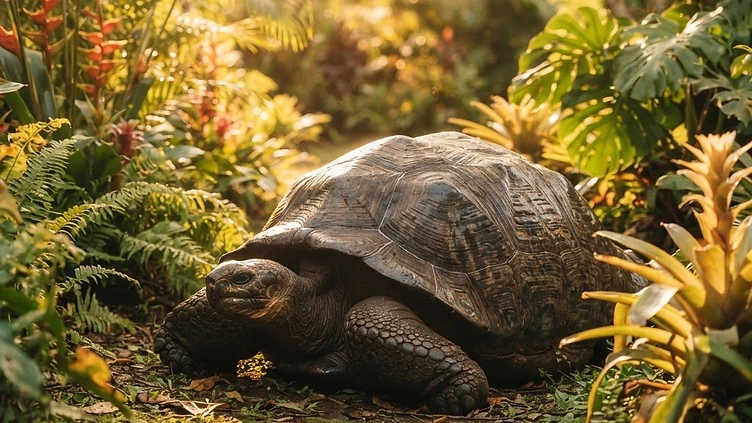
On the remote shores of the of St. Helena, a remarkable resident is currently rewriting our understanding of what it means to grow old. , an giant tortoise, has been a silent witness to history for nearly two centuries. With an estimated birth date around 1832, he emerged into a world governed by and roamed the earth while Charles Darwin was still developing his groundbreaking theories on evolution. Since his arrival on the island in 1882, Jonathan has become more than just a local legend; he is officially recognised as the oldest living land animal on our planet. Now, at 194 years of age, he has become the subject of an extraordinary scientific inquiry that seeks to unlock the biological mysteries hidden within his DNA.
Unlocking the Genome
In 2026, an international research team, featuring experts from the of Cambridge, unveiled the results of a pioneering study that sequenced Jonathan’s genome for the very first time. By mapping his genetic makeup, scientists hoped to discover how his body has managed to withstand the relentless pressures of time that typically cause cellular degradation in other living creatures. The research methodology involved a fascinating comparison, pitting the methylome of this venerable tortoise against that of a youthful five-year-old counterpart of the same species. What the discovered was nothing short of extraordinary.
Through their analysis, the team identified 272 specific genes that have remained remarkably stable throughout Jonathan’s long life. When examining regions associated with the electron transport chain, the team noted significantly lower levels of methylation entropy. In simpler terms, Jonathan possesses a biological resilience that defies conventional expectations of ageing. This suggests that his body maintains a pristine feedback loop where the efficient production of energy within his mitochondria provides the necessary support for his nuclear maintenance. Essentially, his cells seem to have developed a superior method for keeping themselves in top condition, resisting the typical wear and tear that leads to the eventual collapse of biological systems in other organisms.
Lessons in Longevity
This discovery is a beacon of hope for biologists studying the mechanics of ageing. The breakthrough provides fresh scientific insights into the way complex living systems can persist over immense durations. By understanding how Jonathan’s cells protect themselves, researchers are gaining a deeper appreciation for the mechanisms of high-fidelity gene maintenance. These findings do more than just celebrate a tortoise’s long life; they offer a potential model for how biological structures can counteract the corrosive effects of ageing. It is a rare moment where a study on a single, beloved animal on a distant British island could eventually influence our broader knowledge of health and longevity.
For the scientific community, particularly the researchers at the University of Cambridge, this project represents a landmark success. The study highlights the vital importance of protecting our unique biological history. Jonathan’s long residency on St. Helena has granted us a rare opportunity to observe nature in its most enduring form. By sequencing his genome, we have effectively opened a window into the past, learning how certain life forms have managed to thrive for nearly two centuries. It is an optimistic tale of natural fortitude, proving that under the right conditions, life possesses a stubborn and brilliant capacity to maintain its integrity against all odds.
The Future of Ageing Research
As we look toward the future, the implications of this research are profoundly encouraging. While Jonathan continues his gentle life on St. Helena, his legacy is now cemented in the annals of science. The identification of those 272 exceptionally stable genes serves as a template for further exploration into how life can be preserved and protected. The knowledge gained from his genome sequence acts as a foundational stone for future studies that will aim to unravel the complexities of how different species navigate the ageing process.
We live in an age where our curiosity about the natural world is matched only by our capacity to decode its most complex secrets. This study is a testament to that, blending the historical charm of a nineteenth-century tortoise with the cutting-edge technology of twenty-first-century genomics. Jonathan stands as a living testament to the endurance of nature, and his genetic blueprint will undoubtedly continue to inspire and inform researchers for many years to come. In the heart of the British Overseas Territory, beneath the St. Helena sun, the world’s oldest land animal continues his peaceful existence, now recognised not just for his incredible age, but for the profound biological wisdom he carries within every cell. His story serves as a reminder that nature often holds the solutions to our most enduring questions, waiting patiently for us to take a closer look.
Originally reported by
All rights in the original reporting remain with the publishers below.
Originally reported by Jonathan the giant tortoise, 194, offers up insight into secrets of longevity. Our feature is written independently from verified facts — please support the original reporting:
Read the original storyRelated Wins

 Sport
SportCHESS PRODIGIES BREAK BARRIERS IN NATIONAL LEAGUE DEBUT
The 'She Plays to Win' Lionesses have made history by competing in the top division of the Four Nations Chess League, marking the culmination of three consecutive promotions. Despite facing unique regulatory challenges regarding team composition, the squad continues to demonstrate exceptional skill and camaraderie at the highest level of British chess.
London & South · 49 mins ago

 Science
NEW PATHWAYS TO DIAGNOSIS: CAMBRIDGE STUDY SHEDS LIGHT ON AUTOIMMUNE HEALTH
A landmark study from the University of Cambridge is paving the way for more accurate medical care by highlighting critical gender disparities in the diagnosis of autoimmune conditions. By identifying how and why these misdiagnoses occur, researchers are providing the evidence needed to ensure patients receive faster, more effective support for their physical health.
London & South · 50 mins ago

 Environment
A NATURAL REVIVAL FOR BARNES GREEN
A major river restoration project has successfully transformed the Beverley Brook at Barnes Green into a thriving, natural habitat. This initiative has introduced a meandering river channel and a new island, significantly boosting local flood resilience and biodiversity.
London & South · 6 hours ago
The Sunshine Digest
One bright email each week — verified good news only, unsubscribe in a click.