Advanced Super-Resolution Microscope Unveiled in Oxfordshire Offers Fresh Hope for Incurable Bowel Diseases
Scientists at the Rosalind Franklin Institute have unveiled an ultra-high-resolution microscope capable of imaging cellular structures ten times clearer than conventional tools to investigate the root causes of inflammatory bowel conditions. Backed by a newly announced sixty-seven million pound funding package, researchers aim to track cellular changes in living gut tissue to accelerate targeted medical treatments.
A Scientific Milestone in Oxfordshire
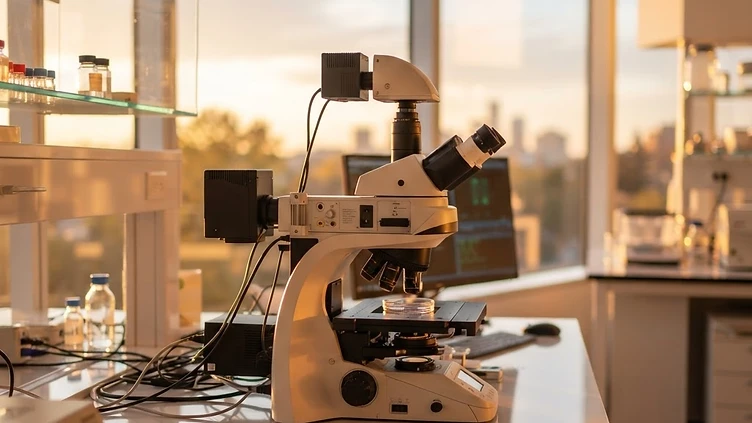
At the heart of the Harwell Science and Innovation Campus in Oxfordshire, a new chapter in medical research has quietly begun. In September 2026, the pulled back the curtain on a piece of technology that promises to transform our understanding of some of the most challenging health conditions facing the nation today. Known affectionately as , this unique, one-of-a-kind microscope represents a massive leap forward in our ability to peer into the microscopic mechanics of the human body, specifically targeting the complex world of inflammatory bowel diseases.
Peering Into The Microscopic World
What sets Curie apart from the standard light microscopes familiar to many is its sheer level of detail. By utilizing stimulated emission depletion microscopy, a -winning two-laser technique, this system achieves a resolution ten times greater than conventional tools. It is capable of resolving structures as tiny as 20 nanometres in size, a feat that allows researchers to look inside living mini-organs and thick tissues with unprecedented clarity. To ensure these fragile samples remain as close to their natural state as possible, the instrument is equipped with a temperature-controlled stage, allowing observation at normal human body temperature. Furthermore, the inclusion of sophisticated deformable mirrors means the device can actively counteract optical distortions that usually occur when peering into thicker tissues, ensuring that scientists get a clear, unobstructed view of biological reality.
Hope For Half A Million Patients
For the 500,000 people across the living with inflammatory bowel diseases such as Crohn’s disease and ulcerative colitis, this development is more than just a win for physics; it is a beacon of potential relief. These conditions, which are most frequently diagnosed in individuals between the ages of 15 and 40, have long remained difficult to treat because their root causes are buried deep within complex cellular structures. By tracking these structural changes in living gut tissue, researchers led by figures such as group leader Dr. Karina Pombo-Garcia and PhD researcher Dimitrios Ioannidis are now positioned to investigate how intestinal walls function. They are specifically examining how protective barrier proteins evolve from foetal development into adulthood, seeking out structural anomalies that might trigger the onset of disease. This level of insight is crucial for the eventual development of targeted therapies that could fundamentally change the clinical outlook for patients.
A Future Of Targeted Treatment
The arrival of Curie was marked by a visit from Science minister , who formally unveiled the instrument. This unveiling coincided with the announcement of a significant financial commitment to the future of the Rosalind Franklin . A funding package totalling sixty-seven million pounds has been secured from the Engineering and via UK Research and Innovation. This substantial investment is set to support the institute over a five-year period, beginning in April 2027. This long-term backing ensures that the facility can continue its mission to bridge the gap between physical sciences and medical breakthroughs. By providing the tools necessary to see the unseen, the institute is creating a path toward medical solutions that were previously impossible to imagine. As researchers continue to refine their work, the atmosphere at the Harwell campus remains one of quiet, determined optimism. Every image captured by Curie acts as a new piece of a massive, complex puzzle, bringing the medical community one step closer to understanding the mechanisms of the gut. While there is still much to learn, the combination of world-class technology, dedicated expertise, and sustained national funding offers a genuinely fresh perspective on how we might one day overcome the debilitating effects of inflammatory bowel conditions, ultimately securing a healthier future for those currently navigating the complexities of these lifelong illnesses.
Originally reported by
All rights in the original reporting remain with the publishers below.
Originally reported by theguardian.com. Our feature is written independently from verified facts — please support the original reporting:
Read the original storyRelated Wins

 Health
Food festival set to return with expanded line-up after Welsh debut
Following a highly successful debut that drew 15,000 visitors to the Welsh capital, the Feast On Cardiff food festival has officially confirmed it will return in 2027 with an even larger programme. The event, which celebrates independent culinary talent, will once again transform Bute Park into a vibrant hub for local restaurants, artisan producers, and street food traders.
Wales · 5 hours ago

 Culture
BRITISH STAGE ICON TRIUMPHS ON BROADWAY
Acclaimed British actor Lesley Manville has achieved a career milestone by winning the 2026 Tony Award for Best Leading Actress in a Play for her performance in the Broadway production of Oedipus. This prestigious accolade follows her successful transition from the West End to New York, where she captivated audiences in Robert Icke’s modern reimagining of the classic tragedy.
London & South · 5 hours ago

 Sport
SportShaun Edwards inspired by mum’s memory as he beds in with Red Roses
Renowned rugby coach Shaun Edwards has joined the England women’s rugby team in a consultancy role to bolster their defensive strategy, bringing his extensive expertise to the world-leading side throughout the WXV Global Series.
London & South · 5 hours ago
The Sunshine Digest
One bright email each week — verified good news only, unsubscribe in a click.